Parents often ask whether three is too young, whether eight is the ideal age, or whether a child has missed their chance by starting at eleven. The honest answer is simpler: children can begin at different ages, provided the class is designed for their stage of development and they can take part safely.
A good class for a four-year-old should not look like a shortened adult session. Equally, an older beginner should not be made to feel behind because other students started earlier. Age matters, but the way the class is taught matters more.
A practical guide by age
Ages 3–5: movement, listening and enjoyment
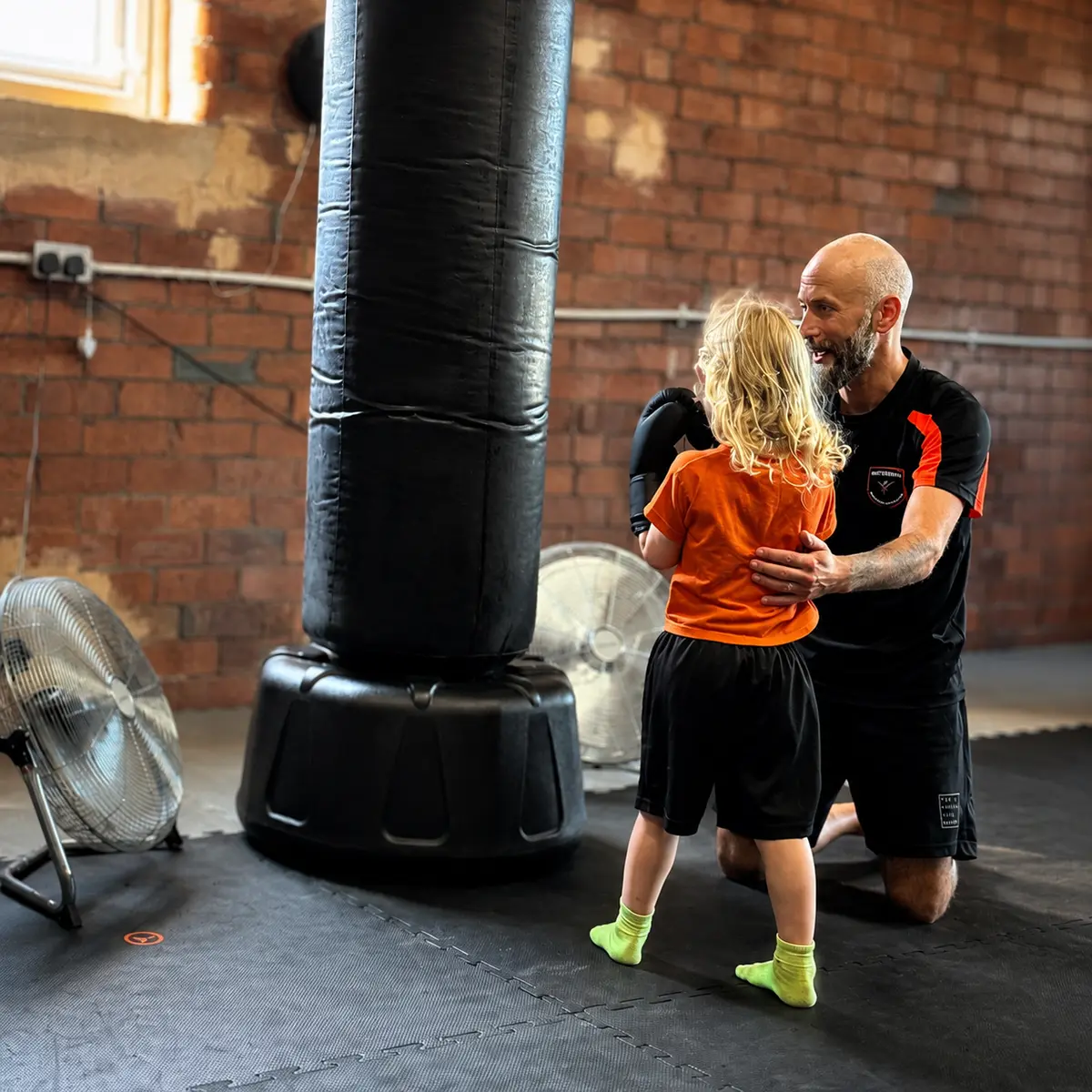
At this age, martial arts should feel playful and manageable. Short activities, simple instructions, plenty of movement and clear routines are more useful than long technical combinations. Children are learning how to join in, take turns, stop when asked and move with control.
The NHS encourages varied active play for pre-school children, including activities such as jumping, running and throwing. Its guidance for children under five is a useful reminder that movement at this age should be varied and appropriate to the child.
A three- or four-year-old does not need to be perfectly focused before starting. They do need a class built around realistic attention spans, with an instructor who can keep them safe without expecting them to behave like older children.
Ages 6–9: a strong time to build foundations
Many children are ready for more structure during these years. They can usually follow a short sequence, work with a partner and understand that improving something takes more than one attempt.
This is a good time to develop useful fundamentals: balance, distance, coordination, controlled technique and the confidence to ask for help. Games can still be an important part of learning, but they should have a purpose rather than simply filling time.
Ages 10–14: definitely not too late
Older children often understand explanations more quickly and can take greater responsibility for their training. They may also arrive feeling self-conscious because they are beginners. A sensible school will place them in an age-appropriate group, explain the basics clearly and measure progress against their own starting point.
Starting at ten, twelve or fourteen is not late. There is no need to “catch up” with someone else’s journey.
The right starting age is when the child can access a class that matches their needs – not when they reach a supposedly perfect number.
Signs your child may be ready
Readiness does not mean they must already be confident, coordinated or able to concentrate for an hour. Those are unreasonable entry requirements for a beginner. Instead, look for a few practical signs:
- they can follow one or two simple instructions with support;
- they can join a group activity for a short period;
- they are beginning to understand personal space and stopping on request;
- they show some interest in movement, martial arts or learning a new skill;
- they can separate from you for the session, even if you remain nearby.
A child does not have to tick every box. A trial class gives the instructor and parent a much clearer picture than age alone.
Contact level matters
“Martial arts” covers very different activities. A playful, non-contact class is not the same as competitive contact training. The NSPCC’s guidance on what makes a good sports club says readiness depends on whether a child has the physical, mental and social skills required by the activity. It places non-contact martial arts in a younger starting bracket than contact martial arts.
That distinction is important. Ask what contact takes place, how it is controlled, how children are grouped and what happens if a child feels uncomfortable. Self-defence should begin with awareness, good decisions, boundaries and leaving danger where possible – physical action is a last resort.
Look at the class, not just the age on the timetable
An age label tells you who the class is intended for. It does not tell you whether the teaching is suitable. When you visit, notice whether:
- instructions are clear and appropriate for the group;
- children are corrected without being embarrassed;
- contact and equipment are properly supervised;
- the instructor notices children who are struggling as well as those who excel;
- parents can ask sensible questions about safety and safeguarding;
- the children appear engaged, safe and able to make progress.
The NSPCC also suggests asking whether staff have been checked, whether the club has a safeguarding policy, what happens after an accident and who parents can speak to about concerns. Those are reasonable questions for any children’s activity.
Is September a good time to begin?
There is no compulsory “season” for martial arts, but September is a natural point for many families to review their weekly routine. The 2026–27 autumn term in Kirklees began on 1 September, so local families are currently working out what fits alongside school, homework and rest.
Do not overload the week simply because a new term has started. Choose a schedule your family can sustain. One consistent class is more useful than an ambitious plan that becomes stressful after three weeks.
What the first class should tell you
The first session is not an exam. Your child does not need to perform every movement correctly or walk in without nerves. You are looking for a reasonable fit.
Afterwards, ask specific questions: What did you enjoy? Was anything confusing? Did you feel comfortable with the instructor? Would you like to try again? “Did you like it?” can produce a quick yes or no without telling you much.
If nerves are the main concern, our related guide explains what a supportive martial arts class should look like for a shy child.
Age groups at TMAM
At The Martial Arts Method in Mirfield, our children’s programme is divided into First Steps (Tots) aged 3–5, Juniors aged 6–9 and Youths aged 10–14. The core ideas are adapted for each group rather than expecting every child to learn in the same way. Parents can watch, beginners do not need a uniform for their taster, and there is no pressure to join afterwards.
If you are unsure which group is right, choose the age shown and let us know anything that would help before the session. Seeing your child in the class will give us better information than guessing from a form.
Try the right class before deciding.
Two free classes let you see the teaching, atmosphere and level of challenge for yourself. Your child can join in wearing comfortable clothes and bring some water.
Book your first free class