
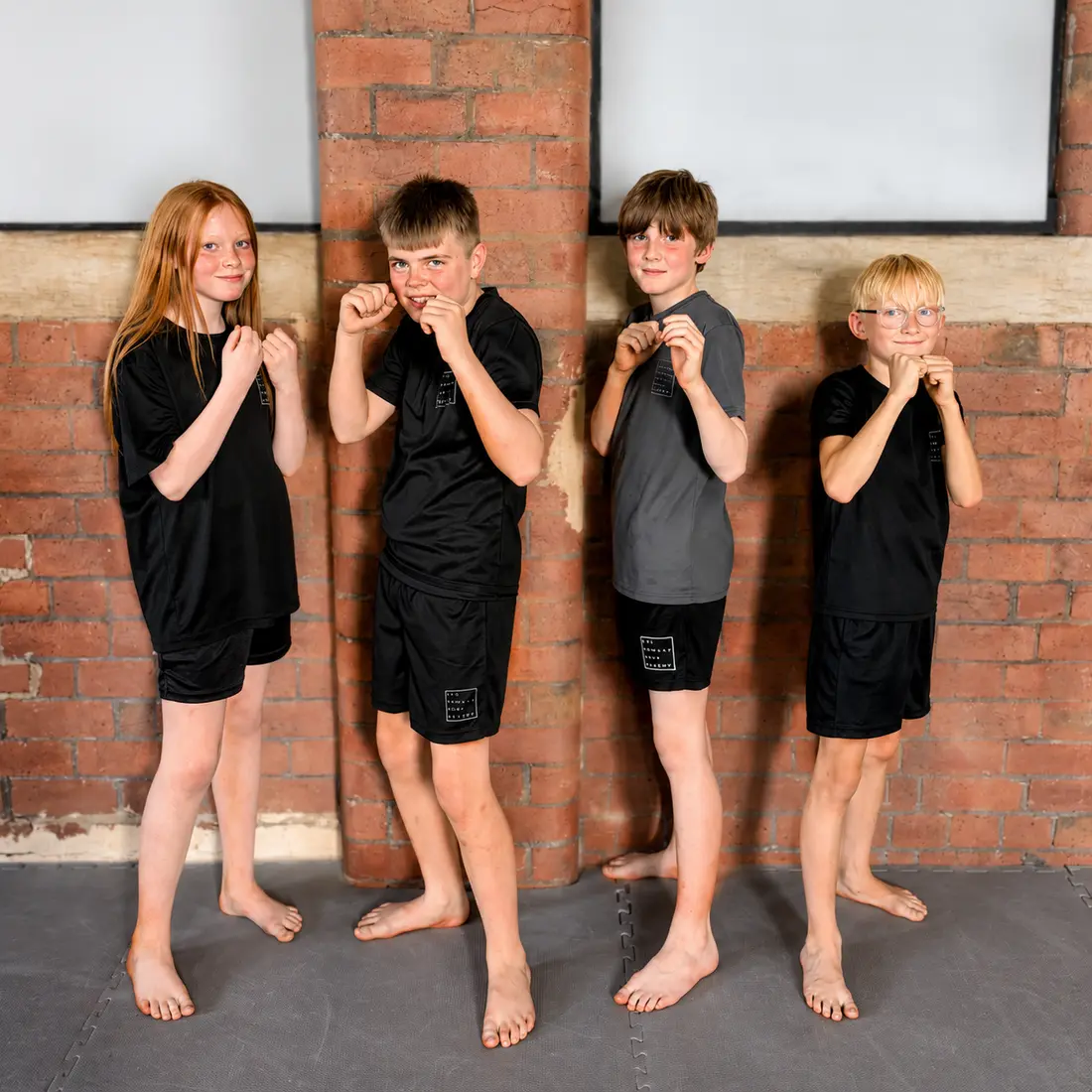
A quiet or nervous child does not need to become the loudest person in the room. They need an environment where they feel safe enough to take one manageable step, then another.
That is why many parents consider martial arts. They want their child to feel more confident, speak up when they need help and become comfortable trying something difficult. Martial arts can support that process – but only when the class is taught in the right way.
Shyness is not a problem that needs fixing
Some children watch before joining in. Some need extra time to answer a question or feel comfortable with a partner. Others are confident at home but become quiet in an unfamiliar group.
None of this means a child is incapable. It usually means the instructor needs to make the first steps clear, achievable and free from unnecessary pressure.
The aim is not to change a child’s personality. It is to help them feel capable when something is unfamiliar or challenging.
What a good first martial arts class should feel like
A child may still feel nervous before a well-run class. The difference is what happens next. Look for an instructor who:
- welcomes the child without making them the centre of attention;
- explains what will happen in simple, clear language;
- gives them a sensible partner or small group;
- uses activities they can attempt successfully;
- encourages effort without demanding instant confidence;
- allows a parent to watch;
- keeps contact controlled and appropriate.
The child should be supported to join in, not dragged into every activity before they are ready. Support does not mean removing every challenge. It means choosing a challenge they can manage.
How confidence actually grows
“Martial arts builds confidence” is easy to say. It only becomes believable when a child collects evidence that they can cope, learn and improve.
That evidence might be:
- walking onto the mat despite feeling unsure;
- remembering a movement they found difficult last week;
- working with a new partner;
- asking the instructor a question;
- staying calm when an activity does not go perfectly;
- helping another student.
These moments look small from the outside, but they matter. Confidence is not something an instructor gives a child through praise alone. It grows when encouragement is matched with genuine progress.
What parents can do before the first class
Keep the explanation simple
Tell them where they are going, how long the class lasts and that the instructor will show them what to do. Avoid building it into a big test of bravery.
Do not promise that they will never feel uncomfortable
Trying something new can feel awkward. A more useful message is: “You might feel nervous, and we will help you through it.”
Give the instructor useful information
If your child finds particular situations difficult, mention it quietly before class. You do not need a diagnosis or a long explanation. A good instructor can often make a small adjustment without drawing attention to the child.
Judge the experience after the class, not in the car park
Pre-class nerves do not always predict how a child will feel once they start. Unless something is genuinely wrong, help them get through the doorway before deciding the class is not for them.
What if they want to leave after five minutes?
First, work out whether they are unsafe, overwhelmed or simply uncomfortable because everything is new. Those are not the same problem.
If they are safe but hesitant, the instructor might offer a smaller step – watching one activity, holding a pad with a parent nearby or joining a short game. If they are genuinely distressed, forcing the session is unlikely to help.
The goal is steady participation, not winning a battle over one class.
Warning signs to look out for
Martial arts should not rely on embarrassment or intimidation. Be cautious if a class:
- mocks children for being nervous;
- uses exercise as humiliation;
- pushes beginners into hard contact;
- treats aggression as confidence;
- discourages parents from asking reasonable questions;
- promises to transform a child overnight.
How we welcome nervous children at TMAM
At The Martial Arts Method in Mirfield, new students join a normal age-appropriate class. Parents can watch, no specialist uniform is needed and there is no obligation to join afterwards.
We give clear instructions, use achievable activities and help each child take part at an appropriate level. We still encourage them to try – but without turning their nerves into a public performance.
Martial arts is not therapy and no responsible school should guarantee a particular result. What we can provide is a welcoming place to practise useful skills, face manageable challenges and make genuine progress.
Let them experience the class.
Two free classes are a good way to see how your child responds to the instructors, the group and the training. Parents are welcome to watch and there is no pressure to join.
Book your first free class