It is a reasonable concern. Parents want their child to become more confident and capable, but they do not want them looking for fights, showing off at school or testing techniques on siblings.
The honest answer is that martial arts is not one single experience. A well-run children’s class can make control, responsibility and partner safety part of every lesson. A poorly led environment can reward dominance, humiliation or hitting harder than necessary. The name of the martial art alone does not tell you which kind of class you are watching.
Children copy the behaviour a class celebrates. If calm decisions and controlled technique earn praise, those become part of learning. If hurting or intimidating people earns status, that is a serious warning sign.
What does the research actually say?
Research does not support a simple claim that martial arts always reduces aggression or always increases it. A 2026 systematic review of longitudinal studies found no consistent overall effect across children and teenagers. Results varied between disciplines, teaching structures and research settings. The authors concluded that educational goals, coaching and training context appear important.
A separate 2026 systematic review and network meta-analysis found the clearest reductions in aggression in traditional, non-combat-focused programmes. Combat-oriented and mixed-style programmes generally showed weaker or non-significant effects. That does not mean one label guarantees a result. It reinforces the practical point that how a class is taught matters.
So be wary of anybody promising that martial arts will “fix” aggression. It is a physical activity and learning environment, not a treatment or a replacement for appropriate family, school or professional support.
Teaching technique is not the same as teaching aggression
A punch is a movement. Aggression is about intention, behaviour and choices. Children can learn how to perform a technique while also learning that they need permission, control and a suitable training setting to use it.
Responsible coaching repeatedly connects skill with judgement. A child should learn to:
- stop immediately when a partner or instructor says stop;
- adjust contact to the drill and the person in front of them;
- avoid unnecessary conflict and seek adult help;
- protect a partner rather than treat them as a target;
- stay composed when they win, lose or find something difficult.
Those expectations cannot be saved for an occasional talk about respect. They need to be visible in ordinary drills, games, partner work and sparring.
Confidence and assertiveness can look different from aggression
A child speaking clearly, setting a boundary or taking up space may look more forceful than before, especially if they were previously very quiet. That is not automatically aggression.
The useful question is what they do with their confidence. Can they say no without threatening somebody? Can they walk away when challenged? Can they use a firm voice and still stay in control? Martial arts should help children make better decisions, not give them a reason to prove they are tough.
If your child is naturally reserved, our guide to martial arts for shy children explains why confidence does not need to mean changing their personality.
What should parents watch during a class?
Do not judge the class only by whether children are quiet or whether the instructor sounds strict. Watch what happens when somebody makes a mistake, becomes overexcited or uses too much contact.
Good signs include clear rules, calm corrections, suitable pairings and an instructor who notices when a child is uncomfortable. Children should be allowed to ask questions and stop when something feels wrong. Praise should focus on control, effort, improvement and good partnership – not simply who hits hardest.
The NSPCC’s guidance on choosing a sports club recommends checking safeguarding procedures, codes of conduct, staff suitability and who parents can speak to about a concern. Those basics apply to martial arts just as they do to any other children’s activity.
Warning signs worth taking seriously
- Children are praised for hurting, frightening or humiliating partners.
- Coaches encourage a “never back down” attitude outside genuine safety situations.
- Contact regularly becomes harder than the drill requires.
- A child saying stop is ignored or mocked.
- Adults lose their temper and call it discipline.
- Parents cannot get a clear answer about safeguarding or reporting concerns.
One energetic class is not the same as an aggressive culture. Children can train hard, compete and practise realistic skills while still treating each other carefully. The dividing line is control and purpose.
What if my child already hits or loses control?
Tell the instructor before the first class rather than hoping martial arts will solve the issue by itself. A responsible coach can explain how the class is structured, set appropriate boundaries and decide whether the group is currently a suitable environment.
If the behaviour is frequent, unsafe or affecting home or school, seek appropriate advice rather than relying on a sports class alone. Martial arts may be one positive part of a child’s week, but instructors should not diagnose the cause or claim to replace specialist support.
How we teach control at TMAM
At The Martial Arts Method in Mirfield, self-defence is a last resort. Safety, awareness, boundaries and good decisions come first. When children practise with partners, the aim is to develop skill together – not to dominate the other person.
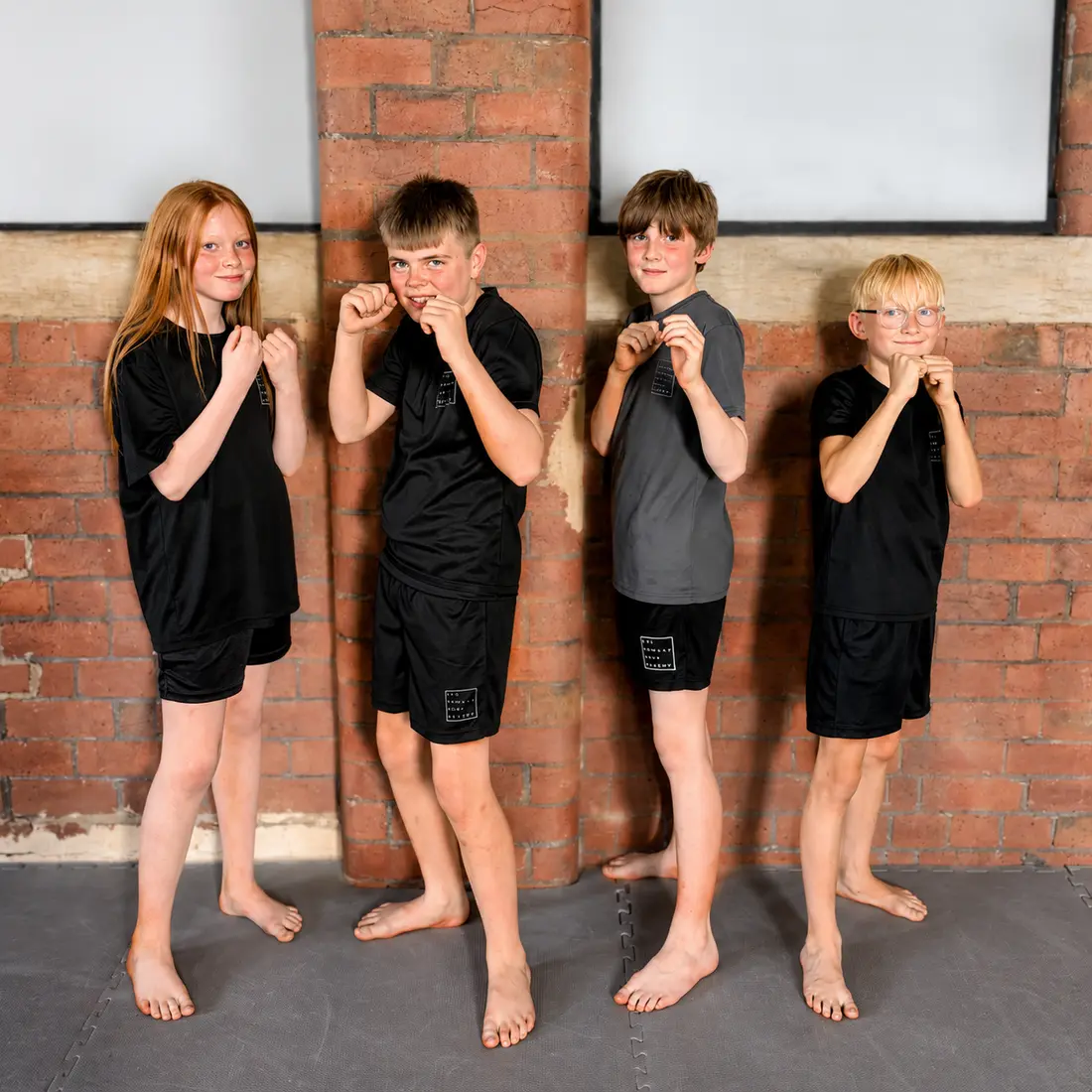
Our classes for ages six to nine and classes for ages ten to fourteen use age-appropriate coaching, controlled contact and clear behaviour expectations. Children still learn practical techniques, but capability must grow alongside responsibility.
Watch how the class is taught.
Your child can try two normal TMAM classes free. Parents are welcome to watch, ask questions and see how we handle technique, contact and behaviour before deciding whether to continue.
Book your first free class