“What should I wear?” sounds like a small question, but it can feel surprisingly important before your first martial arts class. You may have seen people training in uniforms, gloves or specialist clothing and wondered whether you need to buy the same kit before you arrive.
For a first class, the answer is usually much simpler: wear the sort of clean, comfortable sports clothing you already own, bring water and wait until you understand the class before buying anything specialist.
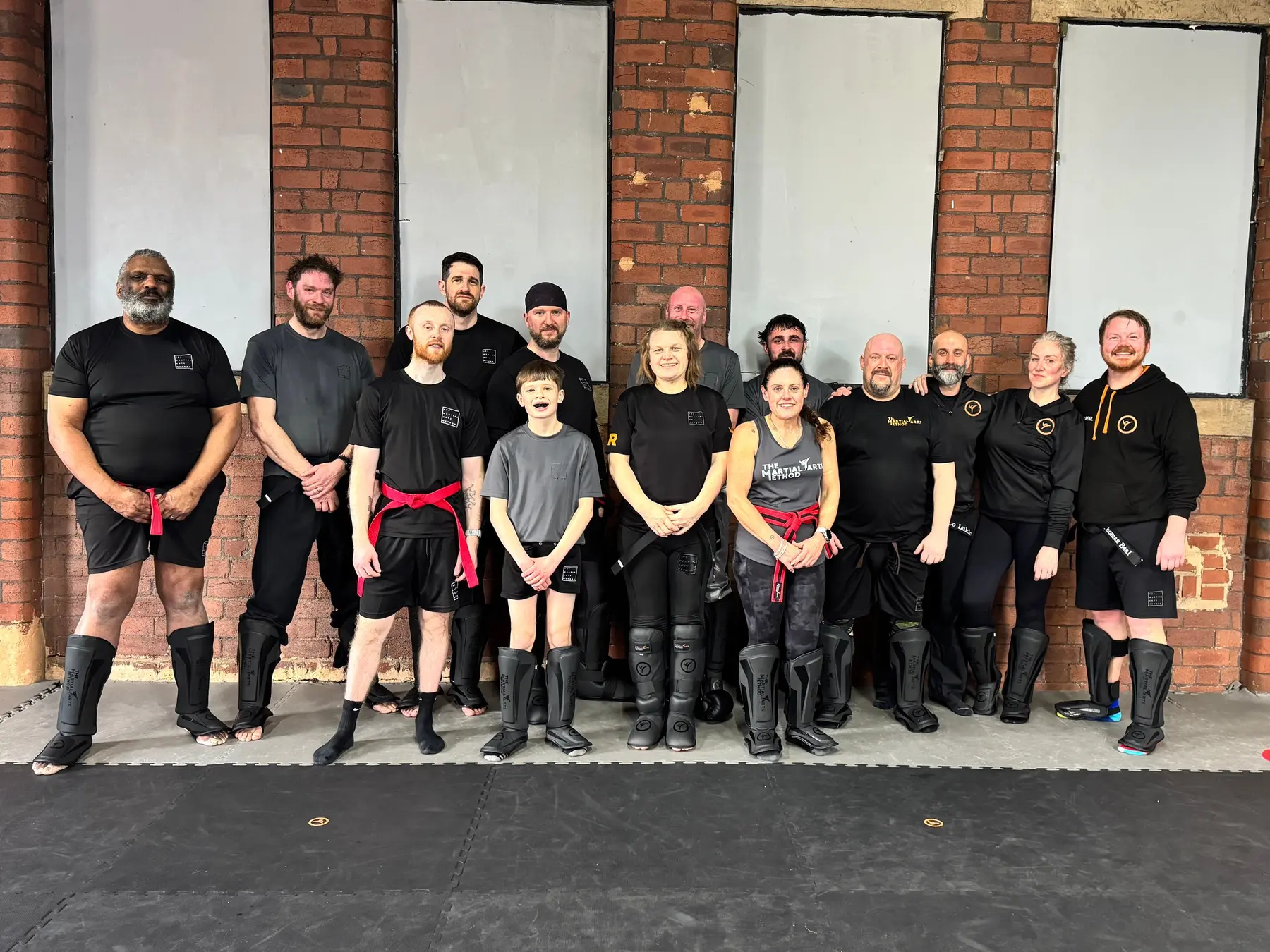
For a TMAM taster, a T-shirt with jogging bottoms, leggings or sports shorts is enough. You do not need a uniform, gloves or sparring equipment.
Choose clothes that let you move comfortably
Your clothing should allow you to lift your knees, turn, bend and reach without feeling restricted. A normal T-shirt or sports top works well. For your lower half, choose jogging bottoms, leggings or sports shorts that give you a comfortable range of movement.
You do not need technical fabrics or a matching outfit. If you already use something for the gym, running or another exercise class, it will probably be suitable. The best test is practical: can you squat, step forwards and lift each knee without the material pulling or needing to be adjusted?
Wear whatever gives you suitable support and coverage while moving. The aim is to concentrate on the coaching rather than worry about an uncomfortable waistband, a top riding up or clothing that feels too revealing.
What clothing is best avoided?
Jeans and other stiff trousers tend to restrict movement, so they are not a good choice. Clothing with large zips, metal fasteners or hard decorative pieces can also be uncomfortable during pad work or partner exercises.
Very loose clothing can catch on hands or equipment. You do not need skin-tight kit, but choose something that stays reasonably close to you when you turn, raise your arms or work with a partner. Check that drawstrings are tied and that anything in your pockets has been removed before the class begins.
If you are unsure between two options, bring both. Arriving with a spare T-shirt or pair of sports bottoms is easier than spending the whole class wishing you had chosen differently.
Do you need trainers?
Footwear rules vary between martial arts and venues, so check with the school rather than buying special shoes. At TMAM, we will show you where to leave outdoor footwear and explain what is appropriate for the training area. Clean socks are useful for before and after the class.
Do not buy martial arts shoes for a taster unless the school has specifically asked you to. Your first class is for learning how the session works, not arriving with a complete set of equipment.
Remove jewellery, watches and anything loose
Take off rings, necklaces, bracelets, earrings and watches before training. They can catch on clothing or another person during partner work. It is usually easier to leave valuable jewellery at home than to keep it beside the training area.
Tie back long hair with a soft hair band. Keep fingernails and toenails reasonably short and clean because classes can include pads, shared equipment and controlled partner drills. Avoid hard clips or anything with sharp edges.
What should you bring with you?
A bottle of water is the main thing. Bring any medication you normally need during exercise and tell the instructor privately about a relevant health condition, injury or movement limitation before the class starts. An instructor can adapt an activity, but should not diagnose a condition or tell you to ignore professional advice.
The current NHS physical activity guidance for adults lists martial arts as vigorous activity. That does not mean a beginner must work flat out. A sensible first session allows you to learn at an appropriate pace, take a break when needed and build up over time.
Arrive about ten minutes early if you can. That gives you time to find the entrance, put your belongings away and speak to the instructor without the class already moving around you.
Should children wear anything different?
The same basic advice works for children: a T-shirt, jogging bottoms, leggings or sports shorts, plus water. Choose clothes they can manage independently where possible. Complicated belts, dungarees, restrictive skirts and clothes they are worried about getting marked can distract from the session.
Parents do not need to buy a uniform before a child has tried the class. The important first questions are whether the teaching is suitable for their age, whether they feel safe and whether they want to return. Our guide to starting ages and readiness explains what else to look for.
When should you buy a uniform or equipment?
Wait until you have tried the class, decided to join and received clear advice from the instructor. Different schools use different uniforms and equipment, so buying in advance can leave you with the wrong size or specification.
At TMAM, no specialist equipment is needed for the two free classes. If you choose to join, your first month includes a uniform and gloves. Full sparring equipment comes later, when the student reaches the appropriate stage; it is not something a beginner needs for their first lesson.
Your first martial arts class in Mirfield
Our Adults & Teens classes are for ages 15 and over, and complete beginners are welcome. The two free classes are normal coached sessions, so you can meet the group, try the teaching and decide whether the training suits you.
If you remember only one thing, make it this: comfortable clothes and water are enough. Nobody expects a new student to look like an experienced martial artist on day one.
Come as a beginner.
Try two adult classes free in Mirfield. Wear comfortable sports clothes, bring water and we will guide you through everything else. There is no uniform to buy and no pressure to join.
Book your first free class