Adults often ask whether they have left it too late to begin martial arts. Sometimes they mean age. More often, they are wondering whether everyone else will be fitter, more flexible and far more experienced.
The honest answer is that age alone does not decide whether you can start. The more useful questions are whether the class welcomes genuine beginners, whether the training can be adjusted appropriately and whether you are prepared to learn something new without expecting to be good at it immediately.
You do not need to get fit before starting
Waiting until you are “fit enough” can become a reason never to begin. A beginner class should not expect you to arrive with the fitness of an experienced student. Your starting point is simply the information an instructor uses to set an appropriate level of work.
The NHS physical activity guidance for adults aged 19 to 64 recommends being active regularly and specifically lists martial arts as a vigorous activity. That does not mean every minute of every class will be vigorous, or that beginners should work at the same intensity. It means martial arts can form one part of an active week when the class and effort are suitable for you.
A good beginner class meets you at your current level. It should help you progress from there – not punish you for where you started.
What actually feels difficult at first?
For many adults, the hardest part is not the exercise. It is being visibly new at something.
You may need to think about which foot moves first. You may forget a sequence five seconds after it was demonstrated. Someone who started six months ago may make a movement look easy while yours feels awkward. None of that is evidence that you are too old or incapable. It is what learning looks like before repetition makes the unfamiliar more natural.
A useful instructor will give you one or two clear points to work on rather than correcting everything at once. A useful training partner will help you learn, not try to prove that they know more.
What if you are starting in your 40s, 50s or later?
Your training should reflect your body, experience and goals rather than an imagined deadline. You may need more time to warm up, a different range of movement or a steadier increase in intensity. Those are sensible adjustments, not failures.
The NHS also recommends regular activity for people aged 65 and over, including work on strength, balance and flexibility. Its guidance for older adults says people who have not exercised for some time, or who have medical conditions or concerns, should speak to a GP first and make sure the activity and intensity suit their fitness.
An instructor should be willing to listen if you have an old injury, limited movement or another relevant concern. They should not diagnose the problem or promise that training will fix it. Their job is to explain the activity, offer appropriate options and be honest if specialist advice is needed.
Do adult beginners have to spar?
You should know what level of contact to expect before taking part. Beginners should not be thrown into uncontrolled sparring to “see how they cope”.
Partner work can begin with cooperative drills: learning distance, holding pads, practising a movement slowly and responding to clear instructions. Contact can then be introduced in a controlled way when the student understands the task and is ready for it.
Practical martial arts is not about encouraging fights. Good self-defence begins with awareness, judgement, boundaries, leaving and getting help. Physical skills are there for situations where safer options are no longer available.
What to look for in an adult martial arts class
Before committing, watch how the class treats people who are less experienced. Look for:
- clear instruction without unnecessary shouting or embarrassment;
- controlled partner work rather than an atmosphere built around proving toughness;
- students with different abilities training respectfully together;
- permission to ask questions and work at an appropriate intensity;
- a proper warm-up and a sensible progression through the session;
- an instructor who takes injuries and safety concerns seriously.
You do not need a class where everything is made easy. You need one where challenge has a purpose and beginners are given a fair route into it.
What should you expect from your first class?
Wear comfortable clothes, bring water and arrive a little early so you are not walking into an unfamiliar room at the last second. Tell the instructor that you are new and mention anything relevant that could affect your training.
Do not judge the session by how polished you looked. Ask better questions afterwards: Did the instruction make sense? Did you feel safe with the people you worked with? Were you challenged without being overwhelmed? Can you imagine becoming more capable if you trained consistently?
The first class should give you enough information to decide whether you want a second one. It does not need to prove what you might achieve over several years.
Starting martial arts as an adult in Mirfield
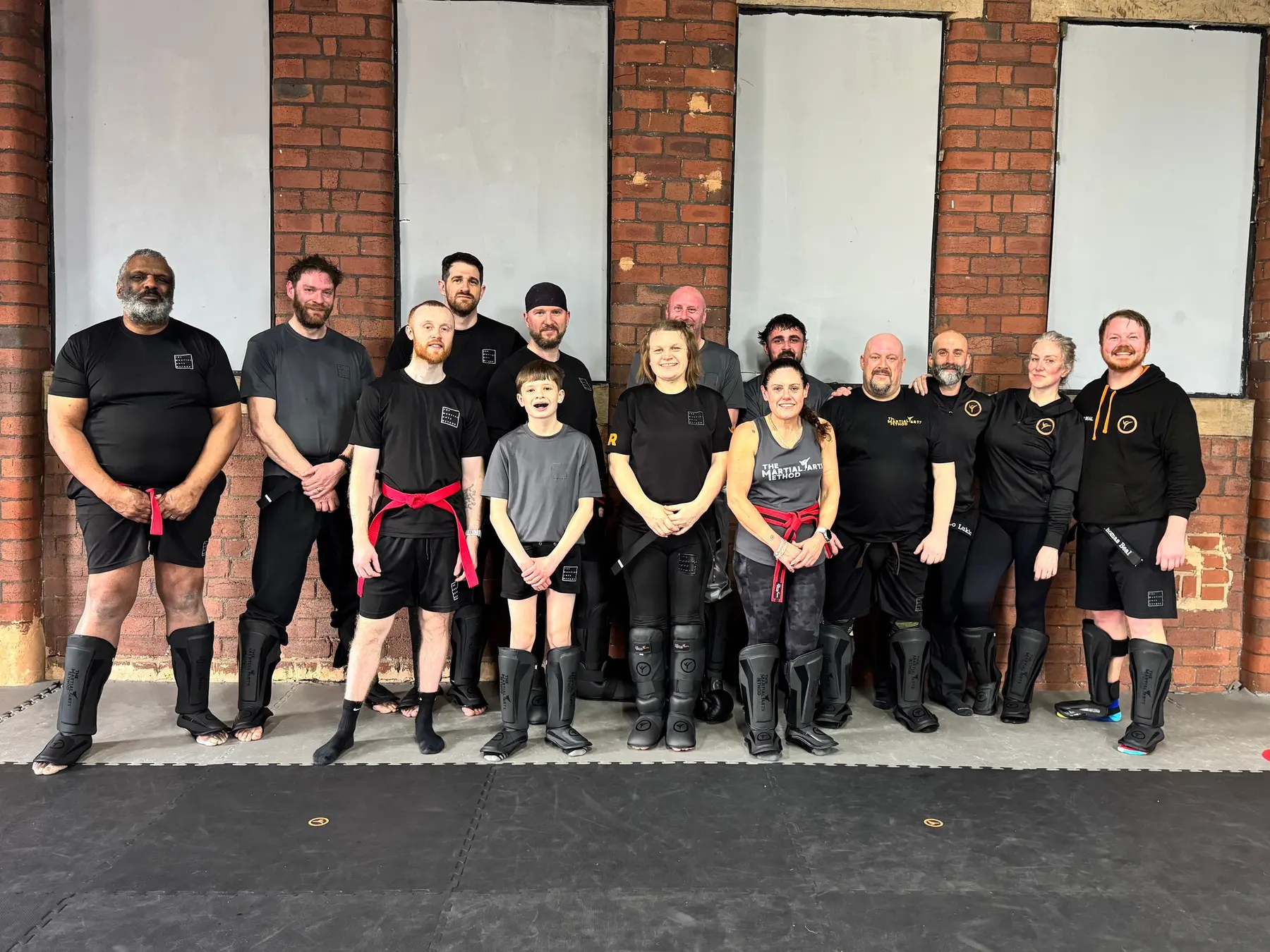
At The Martial Arts Method, our Adults & Teens programme is for ages 15 and over. Complete beginners are welcome, and you do not need a particular level of fitness before attending. Classes run in Mirfield on Tuesday, Wednesday and Saturday; the current times are available on our weekly timetable.
You will join a normal coached class, meet the people you would train with and experience how we teach. There is no uniform required for a taster and no pressure to join afterwards.
Try a class before deciding.
If you are interested but unsure, a free adult taster is a practical way to judge the pace, people and teaching for yourself. Wear comfortable clothes, bring some water and we will guide you through the rest.
Book your first free class